

Article-At-A-Glance
- Repiping with PEX pipe is the most common solution for Tulsa homes with galvanized steel supply lines that have narrowed from decades of mineral scale buildup or copper supply lines developing pinhole leaks from hard water exposure.
- Galvanized pipe installed before 1970 in Tulsa homes has typically been narrowing from mineral accumulation for 50 or more years. By the time pressure drops noticeably at multiple fixtures, the pipe interior may be reduced to a fraction of its original diameter.
- PEX pipe is flexible, corrosion-resistant, and freeze-resistant, making it well-suited for Oklahoma’s hard water supply and ice storm freeze cycles. It can be run under slabs and through walls without the rigid fittings copper requires.
- A whole-house repipe with PEX pipe replaces every supply line in the home in a single project, eliminating the cycle of repairing individual failures as they develop in a deteriorating galvanized or copper system.
- PEX pipe cannot be installed where it will be exposed to direct sunlight or used in swimming pool plumbing. A licensed plumber assesses the property before recommending PEX for any specific application.
- Big C’s Plumbing has performed pipe replacement and repiping with PEX across Tulsa, Bixby, Broken Arrow, Jenks, and the surrounding metro since 1996 under License #063224. Written upfront pricing is provided before any repipe project begins.
Repiping with PEX pipe is the right answer for a Tulsa home when galvanized supply lines have narrowed so severely from mineral scale that pressure at every fixture has declined, when copper supply lines are developing pinhole leaks from hard water exposure, or when a whole-house repipe is more cost-effective than continuing to repair individual failures in a system that is deteriorating throughout.
If you are seeing declining water pressure at multiple fixtures, rust-colored water from hot taps, or recurring leak repairs in the same pipe runs, the sections below explain what PEX pipe is, why it works well for Tulsa’s specific water and soil conditions, and what repiping with PEX looks like when Big C’s performs it on a Tulsa property.
What Is PEX Pipe and Why Plumbers Choose It
PEX stands for cross-linked polyethylene, a flexible plastic pipe material introduced in the United States during the 1980s and now the most widely used supply line material for residential repiping. Unlike copper, which is rigid and requires soldered fittings at every turn, PEX pipe bends around corners and runs continuous lengths from the manifold to each fixture with fewer fittings and no torch work. Unlike galvanized steel, PEX pipe does not corrode from the inside out or accumulate mineral scale that narrows the flow path over decades of use.
PEX pipe is color-coded for easy identification: red for hot water supply lines, blue for cold water supply lines, and white or gray for either. That color coding makes inspection, repair, and future service significantly faster for any plumber who works on the system after installation. For a Tulsa home being repiped in an older construction where original supply lines ran without any labeling system, the PEX color convention alone represents a meaningful improvement in how the system communicates its layout.
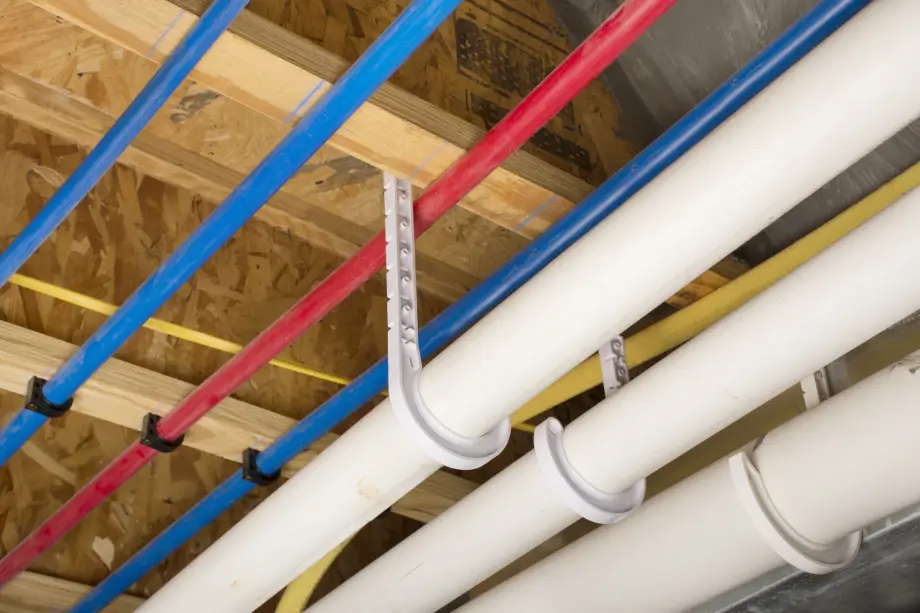
PEX pipe is available in diameters from three-eighths inch to one inch and in coil lengths from short repair pieces to 500-foot rolls for whole-house installations. The flexibility that makes it easy to run through walls and under slabs also gives it a meaningful advantage in Oklahoma’s climate: PEX pipe expands under freezing conditions rather than cracking, which reduces the risk of burst pipe failures during ice storms that regularly push the Tulsa metro to single-digit temperatures.
Signs Your Tulsa Home Needs Repiping With PEX
Most Tulsa homeowners do not realize their supply lines are failing until the symptoms are already advanced. Pipe deterioration in galvanized and copper systems happens gradually over years, and the warning signs are easy to attribute to other causes. The following are the conditions that most consistently point to a repipe evaluation rather than another round of individual repairs on a system that is failing throughout.
Declining water pressure at multiple fixtures simultaneously. This is the most consistent early signal of galvanized pipe failure. Galvanized steel supply lines in Tulsa homes built before 1970 have been accumulating mineral scale from the city’s moderately hard water supply for 50 years or more. That scale narrows the interior diameter of the pipe over time, restricting flow across every fixture the line serves. Homeowners typically notice pressure dropping in the shower first, then at the kitchen sink, then at every tap in the house.
By the time pressure loss is noticeable throughout the home, the pipe interior in affected sections may be reduced to a fraction of its original diameter. A plumber inspecting an original 1955 Midtown Tulsa home will sometimes find galvanized runs so narrowed by scale that flow through the affected sections barely exceeds a trickle at full open.
Rust-colored or discolored water from hot taps only. When discoloration appears specifically from hot water fixtures and not cold, the source is almost always the water heater tank or the galvanized hot supply line connecting it to the fixtures. Galvanized pipe corrodes from the inside out, and the rust particles that break free from corroded interior walls discolor the water passing through.
Cold supply lines may be in better condition because cold water carries fewer dissolved minerals into the galvanized material. Rust-colored hot water in a Tulsa home with original galvanized supply lines is a clear signal that repiping with PEX pipe should be evaluated before the corroded section fails completely and produces an active leak inside a wall.
Recurring pinhole leaks in copper supply lines. Copper supply lines installed in Tulsa homes from the 1970s through the 1990s are now entering the age range where hard water exposure produces pinhole failures. Tulsa’s water supply carries elevated mineral content from the Arkansas River basin, and those minerals gradually erode the pipe wall from the inside at elbows and straight runs exposed to consistent flow. A first pinhole leak in a copper system is often repaired as an isolated event.
A second pinhole failure in the same system within 12 to 18 months is a pattern indicating the copper has reached a stage of deterioration where individual repairs are no longer the right investment. Repiping with PEX pipe eliminates the failing copper system entirely and replaces it with a corrosion-resistant material that does not react to Tulsa’s water chemistry the same way.
Lead pipe in a pre-1986 Tulsa home. Homes built before 1986 may still carry lead supply lines or lead solder at copper fittings. Lead pipe replacement is not a repair situation. It is a full repipe, and PEX pipe is the appropriate replacement material for the supply lines. If a pre-1986 Tulsa home has not had its supply lines evaluated for lead content, that assessment should happen before any other pipe work is prioritized.
| Pipe Material | Typical Lifespan | Common Failure Mode in Tulsa | Repipe Candidate? |
|---|---|---|---|
| Galvanized steel | 40 to 70 years | Interior scale narrowing flow, corrosion failure | Yes, if 50 or more years old |
| Copper | 50 to 70 years | Pinhole leaks from hard water mineral erosion | Yes, if recurring pinhole failures |
| Lead | Indefinite but unsafe | Health risk regardless of age or condition | Yes, immediate |
| PVC | 25 to 45 years | Joint separation, brittleness in older sections | Evaluate at 30 or more years |
| PEX pipe | 50 or more years | UV exposure if installed incorrectly | Replacement material for above |
Why Tulsa’s Water and Soil Make Repiping With PEX a Smart Long-Term Decision
Two conditions specific to Tulsa push the repipe timeline earlier than national averages for pipe replacement: the city’s water hardness and the Vertisol clay soil beneath the foundations. Understanding how both conditions affect pipe systems helps Tulsa homeowners make an informed decision when a plumber recommends repiping rather than another repair.
Tulsa’s water supply carries a hardness rating of 5.2 to 8.2 grains per gallon, drawing from the Arkansas River basin. That mineral content is not a health concern, but it deposits inside pipe walls with every gallon that passes through. In galvanized steel, those deposits accelerate the narrowing that eventually restricts flow to a trickle.
In copper, the mineral interaction gradually erodes the pipe wall at points of consistent flow, producing the pinhole failures that become a recurring repair pattern in Tulsa homes built with copper supply lines between 1970 and 1995. PEX pipe does not react to mineral content in the same way. Its cross-linked polymer structure does not corrode and does not accumulate scale on the interior wall, which is one of the primary reasons Big C’s recommends PEX pipe for whole-house repiping in Tulsa’s water conditions.
Tulsa’s Vertisol clay soil expands when saturated and contracts sharply when dry. That shrink-swell cycle, repeating through Oklahoma’s seasonal pattern, applies stress to supply lines running through or alongside the foundation. Rigid copper and galvanized pipe respond to that movement at solder joints and threaded fittings. PEX pipe absorbs that movement through its inherent flexibility without transmitting stress to the fitting connections. For Tulsa homes on slab foundations where supply lines run under the concrete, PEX pipe’s flexibility and its compatibility with slab leak repair rerouting make it the material of choice when under-slab lines require replacement.
Where PEX Pipe Can and Cannot Be Used in a Tulsa Repipe
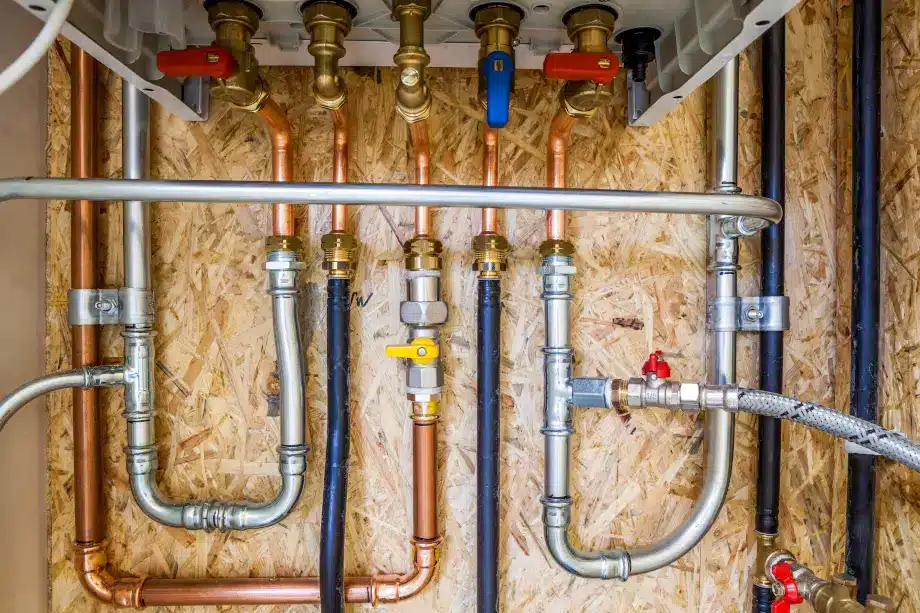
PEX pipe is appropriate for residential supply lines including hot and cold water distribution throughout the house, radiant floor heating systems, and residential fire sprinkler systems. The US Department of Energy recognizes radiant heating as one of the most efficient home heating approaches available, and PEX pipe is the standard supply line for those systems. For Tulsa homes with radiator heating systems, PEX can also distribute the hot water used for heat distribution throughout the structure.
PEX pipe has two primary application limitations that affect how a repipe is planned. It cannot be installed in locations exposed to direct or indirect sunlight because UV radiation degrades the material over time. Exterior runs must be protected or replaced with a UV-resistant alternative. PEX pipe is also not appropriate for swimming pool plumbing, where chlorine concentrations above normal household water levels can damage the material over extended exposure. A licensed plumber assesses both of these conditions during the property evaluation before a repipe project begins.
PEX Pipe Advantages for Oklahoma Homes Specifically
The advantages of PEX pipe over galvanized and copper in Tulsa’s conditions go beyond the general benefits the material is known for nationally. Corrosion resistance matters more in a hard water market than in markets with softer water supplies. Freeze resistance matters more in Oklahoma, where ice storms push temperatures into the single digits every few years and cause the burst pipe events that overwhelmed the Tulsa metro during Winter Storm Uri in 2021. PEX pipe’s flexibility under freezing conditions reduces the risk of the freeze-crack failures that split rigid copper and galvanized pipe in exposed locations when temperatures drop sharply overnight.
PEX pipe also eliminates the water hammer noise that galvanized and copper supply systems produce when flow under pressure is stopped abruptly by a shutoff valve or a dishwasher solenoid. That thud or bang is the pressure wave from stopped water moving through a rigid pipe system. PEX pipe’s flexibility absorbs that pressure wave rather than transmitting it through the line, which is an immediate quality-of-life improvement homeowners notice after a repipe is complete. Combined with the pressure restoration that comes from replacing narrowed galvanized lines, a whole-house PEX repipe changes the daily experience of using water in the home in ways that individual repairs on a deteriorating galvanized system never will.
What Repiping With PEX Looks Like When Big C’s Does It
A whole-house repipe with PEX pipe is a structured project, not a series of individual repairs. Big C’s begins every repipe evaluation with a full supply line assessment to confirm which materials are currently in the system, where active failures or deterioration have occurred, and what the property’s demand load is for sizing the new supply lines correctly. That assessment produces the written scope and pricing that is agreed on before any work begins.
The repipe itself runs new PEX pipe from a central manifold to each fixture throughout the house, replacing the existing supply lines with new material routed through walls and under the slab where necessary. The manifold approach gives each fixture its own dedicated supply run, which improves pressure balance between fixtures running simultaneously and simplifies future service by allowing any single line to be shut off at the manifold without affecting the rest of the house. For Tulsa homes on slab foundations, the rerouting approach that avoids breaking concrete is typically the preferred path unless a specific under-slab run cannot be reached above the slab.
Chris Ogan has performed repiping with PEX pipe across Tulsa, Bixby, Broken Arrow, and the surrounding metro since 1996. On Midtown properties from the 1930s and 1940s, that work has included systems where original galvanized supply lines had narrowed to under a quarter of their original interior diameter from 80 years of mineral accumulation. The pressure restoration after those repipes is immediate and dramatic. See Big C’s full plumbing services for the complete range of supply and drain work handled across the Tulsa metro.

Is Your Tulsa Home Ready for Repiping With PEX Pipe?
If your Tulsa home was built before 1975 and has not had a full supply line replacement, the galvanized or early copper pipe in the system has been under Tulsa water conditions for 50 years or more. The question at that point is not whether the system will eventually need repiping with PEX pipe. It is whether a proactive repipe before the first major failure is more cost-effective than repairing individual failures as they develop across a system that is deteriorating throughout. Big C’s leak detection service can assess current supply line condition and document where deterioration is most advanced before a repipe decision is made.
Big C’s Plumbing has served Tulsa homeowners across every construction era since 1996 under License #063224. Chris Ogan answers the phone directly at any hour, and written upfront pricing is delivered before any repipe project begins. For homes with water heater issues connected to the same hard water conditions affecting the supply lines, both can be evaluated and addressed together in the same project scope. Call (918) 218-2224 at any hour or use the contact form below to schedule an evaluation.
Thinking about repiping with PEX in your Tulsa home? Get a written evaluation today.
Available 24/7. No answering service. Chris answers directly.
Re-Piping With PEX Pipe in Tulsa: FAQs
Answers from a licensed Tulsa plumber with 30 years of experience repiping homes across every construction era in the metro. If your situation is not covered below, call Big C’s directly at (918) 218-2224.
How do I know if my Tulsa home needs repiping with PEX pipe?
The most reliable signs are declining water pressure at multiple fixtures simultaneously, rust-colored or discolored water from hot taps, recurring pinhole leaks in copper supply lines, or any confirmed lead pipe in a pre-1986 home. For galvanized pipe in homes built before 1975, a licensed plumber can assess the interior condition and document where narrowing from mineral scale has reduced flow most severely.
What is the difference between repiping and a standard pipe repair?
A repair addresses a specific failure point such as a pinhole leak, a joint separation, or a corroded fitting. Repiping with PEX pipe replaces the entire supply line system in the house, eliminating the deteriorating material rather than patching it. Repiping is the right path when a supply line system is failing at multiple points or when the pipe material has reached the end of its practical service life across the whole property.
How long does a whole-house repipe take?
A standard residential repipe on a single-family Tulsa home typically takes one to three days depending on the size of the property, the construction era, and the access requirements for reaching supply lines through walls and under slabs. Big C’s provides a realistic project timeline as part of the written scope delivered before work begins.
Does PEX pipe work under a slab foundation?
Yes. PEX pipe is compatible with under-slab installation and is the preferred material for supply line rerouting when slab leak repair requires bypassing a failed under-slab copper or galvanized section. Its flexibility allows it to run through tight spaces without the rigid fittings copper requires, which reduces the number of potential failure points in the new installation.
Will my water pressure improve after repiping with PEX pipe?
For homes with galvanized supply lines narrowed by mineral scale, pressure restoration after repiping with PEX pipe is often dramatic and immediate. Lines that have been restricting flow for years are replaced with full-diameter supply runs, and fixtures that had been operating at a fraction of the system’s design pressure return to full performance. Homes with pinhole copper failures also see pressure improvement once the line losses at the failure points are eliminated.
Is PEX pipe safe for drinking water supply lines?
Yes. PEX pipe is approved for potable water supply in the United States and meets NSF/ANSI 61 standards for drinking water system components. It does not leach materials into the water supply under normal operating conditions and does not corrode or accumulate mineral scale on the interior wall the way galvanized steel does.
Can repiping with PEX pipe be done in a home I am living in?
Yes, with some disruption. Water will need to be shut off during the installation work, and access to wall and ceiling cavities requires some drywall work in the areas where new lines are run. Big C’s manages the project to minimize daily disruption and restores water service at the end of each work day where possible. The scope and timeline are discussed in detail before the project begins.
How does Tulsa's hard water affect pipe lifespan?
Tulsa’s water carries 5.2 to 8.2 grains per gallon of mineral hardness. In galvanized pipe that mineral content accumulates as scale on the interior wall over decades, narrowing the flow path progressively. In copper it contributes to the mineral erosion that produces pinhole failures over time. PEX pipe does not accumulate scale and does not react to Tulsa’s water chemistry in the same way, which is one of the primary reasons Big C’s recommends it for repipe projects in this market.
Does Big C's handle partial repiping or only whole-house projects?
Both. If a specific section of supply line is failing while the rest of the system is in acceptable condition, Big C’s performs targeted replacement of the affected runs. If a full system assessment reveals deterioration throughout the home, a whole-house repipe with PEX pipe is the more cost-effective path. The recommendation reflects the actual condition of the system, not a default toward the larger project.
How do I find a licensed plumber for repiping in Tulsa?
Verify the Oklahoma Plumbing Contractor license before scheduling any repipe project. Licenses are public record at cib.ok.gov. Big C’s Plumbing holds License #063224, continuously active since 1996. Chris Ogan performs every repipe evaluation and installation personally without subcontractors. Call (918) 218-2224 at any hour for 24/7 response and same-day scheduling across Tulsa and the surrounding metro.