

Article-At-A-Glance
- A sewer main problem in a Tulsa home almost always shows up through multiple signals at once: slow drains, unexplained water bill increases, yard saturation, and odor inside the house are the most common combination.
- Oklahoma’s Vertisol clay soil expands and contracts with moisture changes, stressing sewer line joints repeatedly through seasonal cycles. Tulsa homes built before 1985 are most likely to be running original cast iron or Orangeburg pipe that has reached or exceeded its service life.
- A sewer camera inspection is the only reliable way to confirm whether a sewer main problem is an isolated blockage, root intrusion, a cracked pipe, or a collapsed section requiring repair or replacement.
- Multiple slow drains at the same time, particularly in fixtures on different floors, almost always indicate a sewer main blockage rather than individual drain clogs.
- Sewage odor inside the house, green patches in the yard along the sewer line path, and rodent activity near the foundation are late-stage sewer main problem signals that mean the line has already failed.
- Big C’s Plumbing has diagnosed sewer main problems across Tulsa, Bixby, Broken Arrow, Jenks, and the surrounding metro since 1996 under License #063224. Sewer camera inspection is available 24/7 with same-day response.
A sewer main problem almost always announces itself before the line fails completely. The signals are specific, and in Tulsa homes built on Oklahoma clay soil with aging cast iron or Orangeburg pipe, they follow a predictable pattern. If you are seeing more than one of the signs below at the same time, your sewer main is telling you something that a sewer camera inspection needs to confirm before the problem escalates into a full excavation. Here is what to look for and what each sign means about the condition of your sewer main.
Why Tulsa Sewer Lines Fail More Often Than Most Homeowners Expect
Tulsa’s Vertisol clay soil expands significantly when saturated and contracts sharply when dry. Oklahoma’s seasonal pattern delivers both extremes within the same year, and that shrink-swell cycle applies repeated stress to every sewer line joint beneath the yard and under the foundation. Pre-1985 Tulsa construction commonly used cast iron drain pipe and in some cases Orangeburg sewer pipe, a fiber-and-pitch composite that degrades under sustained soil pressure over decades. Both materials are now in the age range where failure is predictable, not accidental.
Tulsa’s mature tree canopy in established neighborhoods like Brookside, Maple Ridge, Midtown, and South Tulsa adds root intrusion pressure on top of soil movement. Tree roots follow moisture, and a sewer main carrying wastewater through clay soil is one of the most consistent moisture sources in any yard. Roots find every joint gap in aging cast iron and clay pipe and expand inside the line until flow is restricted or blocked completely. A sewer main problem from root intrusion is one of the most common camera inspection findings on Tulsa properties where large trees are within 20 feet of the sewer line path.
Sign 1: Multiple Slow Drains at the Same Time
A single slow drain is almost always a localized clog in that fixture’s trap or branch line. When two or more drains in different parts of the house slow down at the same time, that is a sewer main problem. The main line is the point where every branch drain in the house connects, and when flow is restricted there, every fixture downstream of the blockage is affected simultaneously. Toilets gurgling while a sink drains, slow bathtub drainage while the kitchen sink runs slowly, or standing water appearing in a shower while a washing machine runs are all signals pointing to the main rather than an individual fixture.
Do not use chemical drain openers on a sewer main blockage. Chemical agents strong enough to clear a main line blockage cause damage to PVC and degrade aging cast iron from the inside. If multiple drains are running slowly at the same time, call a licensed plumber for a camera inspection before attempting to clear the line. A drain cleaning that dislodges a root mass in a deteriorated section of Orangeburg or cast iron can convert a partial blockage into a collapsed pipe section that requires excavation.
Sign 2: Sewage Odor Inside the House
A functioning sewer line is sealed. Drain traps hold a water barrier that blocks sewer gas from entering living spaces through fixture drains. When sewer odor is present inside the house and no fixture trap has run dry, the smell is coming from a break in the sewer main itself, not from normal drain use. In Tulsa homes where the sewer main runs beneath the foundation or through a crawl space, a crack or joint separation in the line allows sewer gas to migrate upward through the building materials above it.
Sewer gas contains hydrogen sulfide, which produces the characteristic rotten egg odor, and methane, which accumulates in enclosed spaces. Sewer odor inside the house is not a minor inconvenience or a sign to monitor. It is a sign to act on immediately. A sewer main problem producing gas infiltration into living space requires a camera inspection and pressure assessment to locate the failure before the situation becomes a health and safety issue.
Sign 3: Lush Green Grass in a Line Across the Yard
A strip of unusually green or fast-growing grass running in a straight line from the house toward the street, or from the house toward the city connection point, almost always traces to a sewer main leaking nutrient-rich wastewater into the surrounding soil. The organic content in sewer water acts as fertilizer, and grass above a leaking sewer main grows visibly greener and faster than the surrounding lawn within a few weeks of the leak beginning. In Tulsa’s clay soil, that saturation also produces soft or spongy ground that holds footprints in areas that should be firm.
Saturated yard sections directly above the sewer line path that stay wet without recent rain, or that produce standing water after light rain that the surrounding yard absorbs without issue, point to the same sewer main problem. The leak is typically at a joint, a root intrusion point, or a cracked section of the pipe directly below the saturated area. Big C’s has located sewer main failures in Tulsa yards where the green strip was visible from the street weeks before the homeowner recognized it as a plumbing signal.
Sign 4: Sewage Backup at the Lowest Fixture in the House
When the sewer main is blocked completely, wastewater has nowhere to go except backward through the system. It surfaces at the lowest point it can find, which is almost always the lowest drain in the house: a floor drain in a basement utility room, a ground-floor toilet, or a shower on the first floor. Sewage backup at these fixtures when water is running elsewhere in the house is the clearest possible indication of a complete sewer main blockage. This is not a slow drain situation. It is an active sewer failure requiring immediate response.
Stop all water use in the house as soon as sewage backup is confirmed and call a licensed plumber for emergency response. Running additional water into a completely blocked sewer main increases the volume backing up through the lowest fixture and extends the scope of cleanup and damage. Big C’s provides 24/7 emergency sewer main response throughout Tulsa and the surrounding metro for exactly this situation.
Sign 5: Mold or Mildew Along Walls With No Visible Water Source
Sewer pipe sections that run through wall cavities or beneath flooring carry moisture at a consistent level, and a crack or joint failure in those sections raises the ambient humidity in the surrounding building material well above the threshold where mold establishes. Mold growth requires sustained humidity above roughly 60 percent. A leaking sewer main pipe inside a wall does not need to produce visible water to create those conditions. The moisture migrates into drywall, insulation, and framing over days and weeks before any surface discoloration appears.
When mold appears along a baseboard or wall section with no visible water source and the adjacent room does not have an obvious plumbing fixture or supply line running through that wall, a sewer main problem is one of the leading causes to investigate. The combination of mold and sewer odor in the same area is a strong diagnostic indicator that the leak source is a drain or sewer line rather than a supply line. A camera inspection confirms whether the sewer main is the source before any remediation work begins.
Sign 6: Unexplained Water Bill Increase
A sewer main problem does not always involve a drain line. Supply line failures that run parallel to the sewer path, or a sewer condition that has allowed ground movement to stress nearby supply connections, can produce continuous water loss that registers on the meter before any surface symptom appears. If your monthly water bill has increased by 20 percent or more without a corresponding change in household usage, pull the water meter reading with every fixture in the house shut off. A meter dial that continues to move when nothing is running confirms an active water loss somewhere in the pressurized system.
A rising water bill without an obvious cause warrants both a meter check and a sewer camera inspection when other sewer main problem signs are also present. Big C’s leak detection service covers both supply line and sewer line diagnostics in a single visit when multiple symptoms point to different potential sources. Identifying whether the loss is in the pressurized supply system or the gravity drain system determines the repair path and prevents spending money investigating the wrong line.
Sign 7: Rodent Activity Near the Foundation
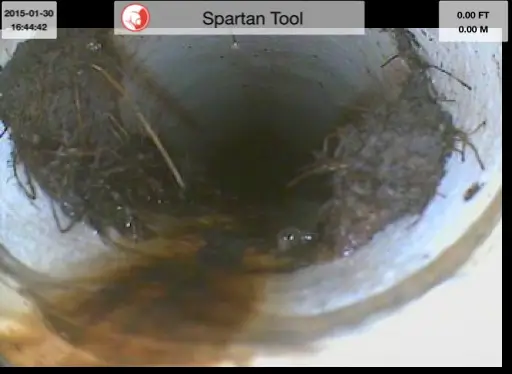
A sudden rodent problem in a Tulsa home that has not previously had one is worth investigating as a potential sewer main signal. The CDC documents that rats and mice carry diseases including Hantavirus, Leptospirosis, and Salmonella, and exposure does not require direct contact. Contaminated droppings and urine are sufficient vectors for several rodent-borne illnesses. A sewer main crack as small as three-quarters of an inch provides enough clearance for a rat to enter a wall cavity from an underground sewer line.
If rodent activity appears near the foundation or inside wall cavities of a home with other sewer main problem signs present, a camera inspection of the sewer main is a logical early step. Root intrusion and pipe joint separation create gaps that rodents follow from underground sewer systems into residential structures, and addressing the sewer main failure removes the entry point that pest control alone cannot seal.
Sign 8: Foundation Cracks or Settlement After a Wet Period
A sewer main leaking continuously beneath or alongside a Tulsa foundation saturates the Vertisol clay beneath the building. Saturated clay swells unevenly, and that uneven pressure loads the foundation differently on the wet side than the dry side. The result is settlement, cracking at doorframe corners, gaps appearing at wall-floor seams, and in advanced cases, visible slope developing in floors that were previously level. These are late-stage sewer main problem consequences, meaning the line has been leaking long enough to change the soil moisture profile beneath the slab or crawl space.
If foundation cracks appear shortly after a drought cycle breaks with heavy rain, or shortly after a period of heavy irrigation, the timing points to soil saturation from an external source rather than simple seasonal movement. A sewer main camera inspection at that point documents whether the drain system is contributing to the soil saturation before a foundation contractor begins any structural assessment. Oklahoma law requires a licensed plumber to certify drain system integrity before and after foundation piering. See Big C’s sewer line repair service for full detail on how sewer main failures connect to foundation work in Tulsa.
Sign 9: Sewage Pooling in the Yard
Standing water in the yard that carries a sewage odor and does not trace to surface runoff or irrigation is a direct sewer main failure. At this stage the line has cracked, collapsed, or separated at a joint severely enough to release wastewater volume that the surrounding soil cannot absorb. The pooling typically appears directly above or within a few feet of the failure point, though Oklahoma clay can redirect flow laterally before it surfaces. This is a same-day service call, not a situation to monitor over the weekend.
The repair scope for a sewer main failure producing yard pooling depends on the pipe material, the location within the line, and the extent of the failure. A camera inspection run before any excavation begins confirms exactly where the failure is and what it looks like, which determines whether a spot repair resolves the condition or whether the line requires replacement across a longer section. Opening a yard without that camera confirmation means digging to a location that may not be the actual failure point.
| Sewer Main Problem Sign | What It Indicates | Urgency |
|---|---|---|
| Multiple slow drains simultaneously | Main line blockage | Call today |
| Sewage odor inside the house | Cracked or failed sewer main | Call today |
| Lush green strip across the yard | Sewer main leaking into soil | Schedule promptly |
| Sewage backup at lowest fixture | Complete main line blockage | Emergency call now |
| Mold with no visible water source | Sewer pipe leaking inside wall | Schedule promptly |
| Unexplained water bill increase | Active water or sewer loss | Schedule promptly |
| Sudden rodent activity near foundation | Sewer main crack providing entry | Schedule promptly |
| Foundation cracks after wet period | Sewer saturation shifting soil | Call today |
| Sewage pooling in yard | Collapsed or severely cracked main | Emergency call now |
What Big C’s Sewer Camera Inspection Finds on These Calls
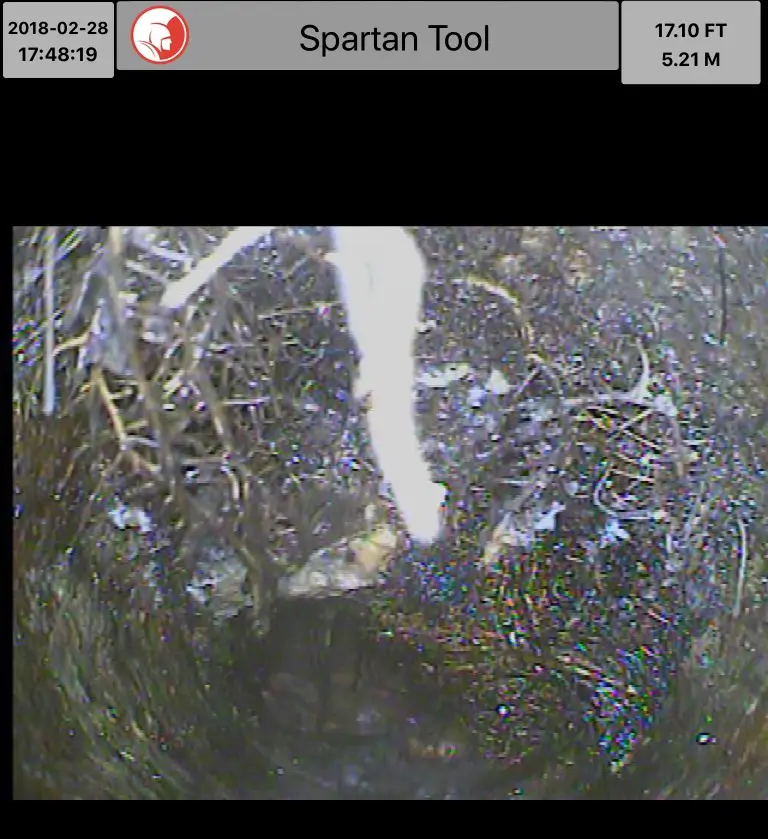
A sewer camera inspection is the only way to confirm what is causing a sewer main problem before any excavation or repair scope is committed to. Big C’s runs a camera through the main line from the cleanout access point, producing real-time video of the interior condition from the building connection to the city tie-in. What the camera finds determines whether the situation requires drain cleaning, a spot repair, or a full sewer line replacement across the affected section.
On Tulsa sewer camera calls, the most common findings are root intrusion through deteriorated cast iron or clay tile joints, offset joints where clay soil movement has shifted pipe sections out of alignment, interior corrosion narrowing the effective flow diameter on aging cast iron, and Orangeburg pipe that has deformed under soil pressure to the point where the original round cross-section has collapsed into an oval. Each finding produces a distinct visual signature on the camera that tells Big C’s exactly what repair method applies before a shovel touches the yard. Chris Ogan has run sewer camera inspections across Tulsa since 1996 and can identify pipe condition, material, and failure type from the camera feed before the inspection is complete.
Seeing Sewer Main Problem Signs in Your Tulsa Home? Call Big C’s
If you are seeing one or more of the signs above, the right next step is a sewer camera inspection rather than waiting to see whether the symptoms get worse. A sewer main problem that is caught at the slow drain or odor stage is almost always a simpler and less expensive repair than the same problem caught after backup, yard pooling, or foundation movement. Big C’s has diagnosed sewer main problems across Tulsa, Bixby, Broken Arrow, Jenks, Glenpool, Coweta, and the surrounding metro since 1996 under License #063224. Chris Ogan answers the phone directly at any hour with 24/7 availability and written upfront pricing before any work begins.
Sewer main problem signs in your Tulsa home? Get a camera inspection today.
Available 24/7. No answering service. Chris answers directly.
Sewer Main Problems in Tulsa: FAQs
Answers from a licensed Tulsa plumber with 30 years of sewer camera inspection and sewer line repair experience across every construction era in the metro. If your situation is not covered below, call Big C’s directly at (918) 218-2224.
What is the difference between a sewer main problem and a drain clog?
A single slow or blocked drain is almost always a localized clog in that fixture’s branch line or trap. A sewer main problem affects multiple fixtures simultaneously because the main line is where every branch drain in the house connects. When two or more drains in different rooms slow down at the same time, or when sewage backs up at the lowest fixture while water is running elsewhere, the issue is in the main rather than an individual drain.
How do I know if I have a sewer main blockage or a broken sewer line?
A blockage produces slow drainage and backup but the pipe structure is intact. A broken or cracked sewer main produces odor inside the house, green patches in the yard, mold without a visible water source, and in advanced cases, yard pooling or foundation movement. The only reliable way to distinguish between a blockage and a structural failure is a sewer camera inspection. Big C’s runs the camera before recommending any repair scope.
Why does my Tulsa sewer line keep having problems?
The most common reasons for recurring sewer main problems in Tulsa are Vertisol clay soil movement stressing pipe joints through seasonal moisture cycles, mature tree root systems finding their way into aging cast iron or clay tile pipe, and Orangeburg pipe that has been deforming under soil pressure for decades. Homes built before 1985 in Tulsa are most likely to be running original pipe materials that have exceeded their practical service life.
Can tree roots really break a sewer main?
Yes, and it is one of the most common sewer main problem findings on Big C’s camera inspections across established Tulsa neighborhoods. Roots do not break pipes initially. They find existing gaps at joint connections and push through, then expand inside the line as they grow toward the moisture source the sewer main provides. Over time a root mass that started as a hairline intrusion can fill the entire pipe diameter and create a complete blockage. Roots also accelerate deterioration at the joint where they entered.
What does a sewer camera inspection show?
The camera produces real-time video of the interior of the sewer main from the cleanout access point to the city connection. Big C’s can identify root intrusion, offset pipe joints from soil movement, interior corrosion narrowing the flow path on cast iron, Orangeburg pipe deformed by soil pressure, cracks, separations, and collapsed sections. The camera footage determines exactly what repair method is needed and where before any excavation begins.
How much does sewer main repair cost in Tulsa?
The cost depends on what the camera finds, the pipe material, the depth of the line, and whether a spot repair addresses the condition or a longer replacement section is required. Big C’s provides written upfront pricing after the camera inspection confirms the failure type and location. No repair scope is quoted before the camera runs because a number without a confirmed finding is not a real estimate.
Is sewage odor inside my house dangerous?
Yes. Sewer gas contains hydrogen sulfide, which produces the rotten egg odor, and methane, which accumulates in enclosed spaces. Sustained exposure to sewer gas at elevated concentrations causes headaches, nausea, and in severe cases more serious health effects. Sewer odor inside the house when no trap has run dry is a same-day service call, not a monitoring situation.
What is Orangeburg pipe and why is it a problem in Tulsa homes?
Orangeburg is a pipe material made from compressed layers of wood pulp and pitch that was used in residential sewer construction from the late 1940s through the mid-1970s. It was intended as a temporary material but remained in service in many Tulsa homes far beyond its design life. Under sustained soil pressure Orangeburg deforms from its original round shape into an oval, reducing flow capacity and eventually collapsing. A sewer camera inspection identifies Orangeburg by its characteristic deformed profile. Homes built in Tulsa between 1948 and 1975 may still have Orangeburg in their sewer main.
Can a sewer main problem cause foundation damage?
Yes. A sewer main leaking continuously beneath a Tulsa foundation saturates the Vertisol clay beneath the building. That saturated clay swells unevenly, loading the foundation differently on the wet side than the dry side and producing settlement, doorframe cracks, and in advanced cases visible floor slope. Oklahoma law requires a licensed plumber to certify drain system integrity before and after any foundation piering work. If foundation movement is being addressed at a Tulsa property, the sewer main condition should be camera-inspected and documented first.
How do I find a licensed sewer line plumber in Tulsa?
Verify the Oklahoma Plumbing Contractor license before scheduling anyone for sewer main work. Licenses are public record and searchable at cib.ok.gov. Big C’s Plumbing holds License #063224, continuously active since 1996. Chris Ogan performs every sewer camera inspection and sewer line repair personally without subcontractors. Call (918) 218-2224 at any hour for 24/7 sewer main response across Tulsa and the surrounding metro.