

Article-At-A-Glance
- A slab leak is a water line break beneath your home’s concrete foundation. In Tulsa, Oklahoma’s Vertisol clay soil expands and contracts with seasonal moisture changes, stressing pipe joints and accelerating slab leak formation in homes across every construction era.
- The most common slab leak symptoms are an unexplained water bill spike, the sound of running water when nothing is on, warm or damp spots on floors, low water pressure, mold along baseboards, and cracks appearing in walls or ceilings.
- Professional slab leak detection uses acoustic listening equipment and electronic sensors to pinpoint the leak location before any concrete is touched. This protects post-tension slabs and limits the repair footprint significantly.
- Slab leak repair options include pipe rerouting through walls or ceilings, spot repair through targeted concrete access, and epoxy pipe lining for eligible systems. The right method depends on pipe age, material, and leak location.
- Oklahoma law requires hydrostatic pressure testing before and after any foundation piering work. Big C’s performs that testing as a licensed plumber. Foundation piering itself is performed by a separate foundation repair contractor.
- Big C’s Plumbing has diagnosed and repaired slab leaks across Tulsa, Bixby, Broken Arrow, Jenks, and the surrounding metro since 1996 under License #063224. Chris Ogan answers calls directly 24 hours a day, 7 days a week.
A slab leak is a break or crack in a water supply or drain line running beneath your home’s concrete foundation. If you suspect a slab leak, the immediate steps are straightforward: stop using water in the affected area, check your meter to confirm flow when everything is off, and call a licensed plumber for acoustic leak detection before anyone breaks concrete. Left alone, a slab leak causes foundation damage, mold growth, and structural problems that cost far more to fix than the original slab leak repair would have. Tulsa homeowners face a higher slab leak risk than most metro areas in the region, and the reason is directly beneath every yard in Creek County and across the Tulsa metro.
Why Tulsa Homes Face a Higher Slab Leak Risk
TThe ground beneath Tulsa foundations is Vertisol clay, one of the most reactive soil types documented by the USDA Natural Resources Conservation Service. Vertisol clay expands significantly when saturated and contracts sharply when dry. Oklahoma’s seasonal pattern delivers both extremes within the same calendar year, and that cycle shifts the soil beneath a standard poured concrete foundation repeatedly over time. Homes built before post-tension slab design became standard in the region were not engineered to absorb that kind of repeated ground movement.
Every shift stresses the pipe joints embedded in or running beneath the slab. Copper supply lines, cast iron drain sections, and galvanized pipe all respond to that stress differently, but none are immune. Pre-1980s construction across Tulsa’s established neighborhoods runs pipe materials that have already been cycling through Oklahoma’s soil movement for four to six decades. That cumulative stress is why slab leaks are not random events in Tulsa. They follow predictable patterns based on soil type, pipe age, and construction era, which is exactly what Chris Ogan diagnoses on every slab leak call.
Slab Leak Symptoms Tulsa Homeowners Should Know
A slab leak rarely announces itself with obvious flooding. More often it builds slowly, producing signals that homeowners dismiss until the damage is already significant. Knowing the slab leak symptoms specific to how Tulsa homes are built gives you the best chance of catching the problem early enough for a straightforward repair rather than a major excavation.
Sound of running water when nothing is on. This is one of the earliest and most reliable slab leak symptoms. Your home has a baseline of silence when every fixture is off. If you hear water moving through pipes when no taps, appliances, or toilets are running, a slab leak is one of the most likely explanations. Check your water meter: if the dial is spinning with everything shut off, you have active water loss. Call a plumber before doing anything else.
Unexplained water bill increases. The EPA estimates that household leaks waste more than 1 trillion gallons of water nationwide each year. A slab leak contributes to that total whether you notice it or not, and you pay for every gallon at the meter. Pull your last three months of water bills and compare the total gallon usage, not just the dollar amount. A consistent climb in usage with no change in household habits is a slab leak symptom worth acting on immediately.
Warm or hot spots on the floor. When a hot water supply line beneath the slab develops a slab leak, the escaping water warms the concrete and flooring above it. On tile and hardwood, this produces patches that feel noticeably warmer underfoot than surrounding areas. On carpet, the same warmth may be harder to detect but the padding may feel damp or soft. A warm spot that does not match the location of any heat vent or radiant system almost always traces to a hot water slab leak below.
Damp, soft, or buckled flooring. Water seeping upward through the slab will saturate whatever flooring material sits above the slab leak. Carpet feels wet or spongy underfoot even when no surface water is visible. Hardwood planks begin to buckle, warp, or cup at the edges. Tile grout lines may darken or show efflorescence. Any of these without an obvious surface source, such as a spill or a leaking appliance, points to moisture migrating up through the slab below your feet.
Mold or mildew along baseboards and flooring edges. Mold requires sustained moisture to establish and spread. When a slab leak runs continuously beneath the floor, it provides exactly that environment at the concrete-to-flooring interface. The first visible signs are typically darkening or discoloration along baseboards at floor level, a musty odor that returns after cleaning, or visible growth in carpet fibers near walls on the first floor. Mold from a slab leak is not a cleaning problem. It is a plumbing problem that will continue producing mold until the slab leak is repaired.
Low water pressure throughout the house. A significant slab leak releases water at the break point instead of delivering it to fixtures. The result is reduced pressure at every tap, shower, and appliance downstream of the leak. If low pressure is consistent across multiple fixtures rather than isolated to one area, and other causes like a partially closed main valve have been ruled out, a slab leak is a leading candidate. This slab leak symptom is more reliable as a diagnostic signal when it appears suddenly rather than gradually over months.
Cracks in walls, ceilings, or flooring surfaces. Sustained moisture from a slab leak migrates upward through the foundation and into the structure above. As concrete and sheetrock absorb that moisture, they expand unevenly and crack. New cracks appearing in interior walls, particularly near corners or along the floor line, or cracks spreading along ceiling drywall on the first floor, are structural signals that a slab leak has been active long enough to affect the building materials above it. This is a late-stage slab leak symptom. Reaching this point means the repair scope has already grown beyond what it would have been at first detection.
Puddles or saturated soil around the foundation exterior. Some slab leaks route water laterally through the slab and out around the foundation perimeter. Saturated soil that stays wet without recent rain, or standing water pooling against the foundation even in dry conditions, can indicate that a slab leak is directing water outward rather than straight up. Over time, that exterior saturation softens the soil bearing the foundation load and contributes to the same ground movement that caused the original slab leak.
| Slab Leak Symptom | What It Indicates | Urgency |
|---|---|---|
| Water meter spinning with everything off | Active water loss confirmed | Call today |
| Sound of running water when nothing is on | Likely slab or concealed leak | Call today |
| Warm spot on floor not near a vent | Hot water supply line slab leak | Schedule promptly |
| Unexplained water bill increase | Continuous water loss | Schedule promptly |
| Damp, buckled, or soft flooring | Water migrating up through slab | Schedule promptly |
| Mold along baseboards or musty odor | Sustained moisture at floor level | Schedule promptly |
| Sudden low pressure across multiple fixtures | Water escaping at leak point | Schedule promptly |
| New cracks in walls or ceiling near floor line | Structural moisture damage underway | Call today |
How Big C’s Detects a Slab Leak in Tulsa
Slab leak detection is the step that determines everything that follows. Getting the pinpoint location of a slab leak correct before any concrete is touched is what separates a targeted repair from a destructive, expensive dig that still may not find the leak on the first attempt. Big C’s uses acoustic listening equipment and electronic sensors calibrated for the pipe materials and slab construction types common across Tulsa’s residential and commercial building stock.
The acoustic method works by isolating the sound of water escaping under pressure at the leak point. In a pressurized supply line, a slab leak produces a distinctive noise signature that differs from normal pipe flow. The listening equipment amplifies that signal and allows the technician to triangulate the leak location on the slab surface without breaching any concrete. On a post-tension slab, this non-invasive step is not just more efficient. It is essential. Cutting into a post-tension slab without a confirmed leak location risks severing tensioning cables that compromise the structural integrity of the entire slab.
Chris Ogan has located slab leaks in Tulsa homes where the surface symptom, a warm spot in the hallway, was more than eight feet horizontally from the actual leak beneath the slab. Acoustic pinpointing confirmed the correct location before a single square inch of flooring was removed. That precision is what the slab leak repair process at Big C’s is built on.
Slab Leak Repair Options for Tulsa Homes
Once a slab leak is located, the repair method depends on the pipe material, the leak location within the slab, the slab type, and the age and overall condition of the plumbing system. Big C’s evaluates all of these before recommending a repair path, and delivers the full scope and cost in writing before any work begins.
Pipe rerouting is the most common repair method for supply line slab leaks in Tulsa’s older homes. Rather than accessing the damaged pipe through the slab, the repair runs new copper or PEX supply line through the walls or ceiling, bypassing the leaking section entirely. This approach avoids concrete work on post-tension slabs, minimizes disruption to the living space, and removes the damaged pipe section from service permanently rather than patching it. For galvanized or copper systems showing broader deterioration, rerouting also addresses the likelihood of future slab leaks in the same line.
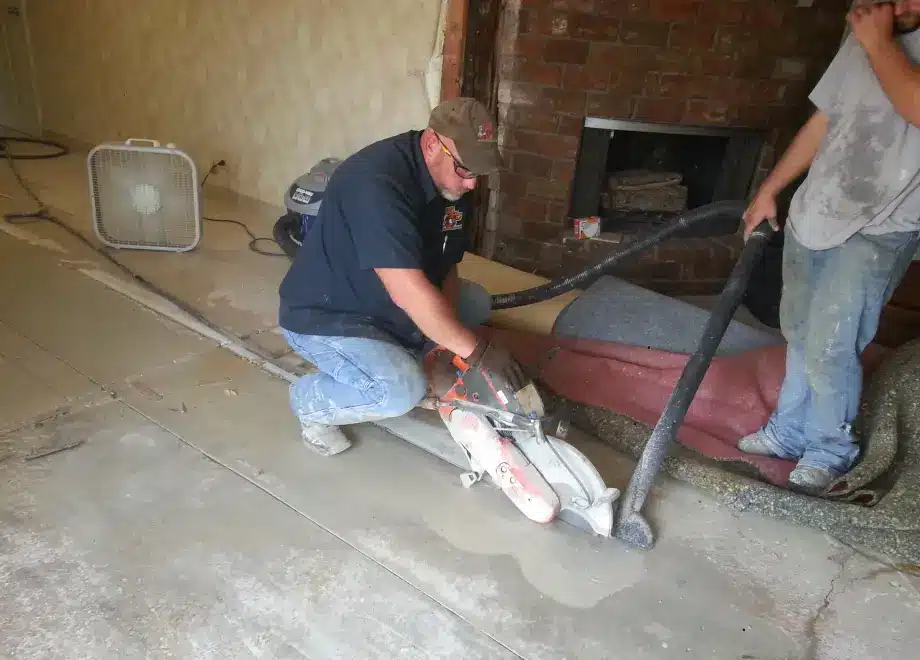
Spot repair through targeted slab access is appropriate when the leak is in an accessible location within a standard poured slab, the pipe material is otherwise in good condition, and the repair scope is well-defined. This involves cutting a precise opening through the concrete at the confirmed leak location, repairing or replacing the damaged pipe section, and patching the concrete and flooring. On post-tension slabs this method requires careful confirmation that no tensioning cables run through the cut zone before any concrete work begins.
Epoxy pipe lining applies in specific circumstances where the pipe is accessible from both ends and the interior diameter is sufficient for the lining process. A flexible epoxy liner is inserted into the existing pipe and cured in place, sealing the leak without removing the pipe. This option is not universally applicable, and Big C’s will advise clearly on whether the pipe system and leak characteristics qualify before presenting it as a repair option.
| Repair Method | Best For | Concrete Work Required |
|---|---|---|
| Pipe rerouting | Post-tension slabs, older pipe systems, multiple leaks | None |
| Spot repair through slab | Standard poured slabs, isolated leak, good pipe condition | Targeted cut at confirmed location |
| Epoxy pipe lining | Eligible pipe diameter, accessible from both ends | None |
Hydrostatic Pressure Testing and Foundation Piering in Tulsa
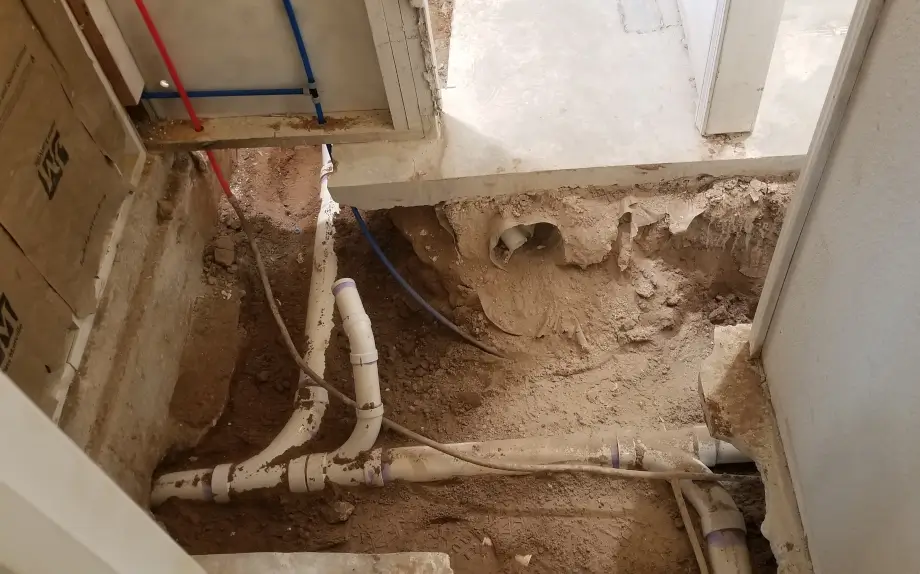
Tulsa’s reactive clay soil causes foundation movement that leads some homeowners down a parallel path: foundation settling or shifting that requires piering from a foundation repair contractor. What most homeowners are not told at the start of that process is that Oklahoma law requires a licensed plumber to conduct hydrostatic pressure testing on the drain line system before foundation piering work begins, and again after it is complete.
The pre-piering test establishes whether the drain lines have any existing slab leak or failure before the piering contractor lifts the foundation. The post-piering test confirms that the piering work did not introduce a new slab leak or damage an existing line. Big C’s performs both tests as a licensed plumber under the Oklahoma Plumbing Contractor License. The foundation piering itself is performed by a separate, licensed foundation repair contractor. Big C’s role is the pressure testing, the documentation, and any plumbing repair that testing reveals is needed. See Big C’s hydrostatic pressure testing page for full detail on the process and what the test covers.
What to Do Right Now If You Suspect a Slab Leak
If you are seeing one or more of the slab leak symptoms described above, the sequence of steps is straightforward. First, check your water meter with every fixture and appliance in the house shut off. If the meter dial is moving, you have active water loss and a slab leak is among the most likely causes. Second, do not attempt to locate or access the slab leak yourself. Digging at a suspected location without acoustic confirmation can cause additional damage and will not reliably find the leak. Third, call a licensed plumber who performs acoustic slab leak detection in Tulsa.
Big C’s Plumbing has diagnosed slab leaks across Tulsa, Bixby, Broken Arrow, Jenks, Glenpool, Coweta, and the surrounding metro since 1996 under License #063224. Chris Ogan answers the phone directly at any hour. Written upfront pricing is delivered before any detection or repair work begins. No subcontractors, no crew rotation, no handoffs. See Big C’s full service area coverage across the metro.
Slab leak symptoms in your Tulsa home? Get a written diagnosis today.
Available 24/7. No answering service. Chris answers directly.
Slab Leak Repair in Tulsa: FAQs
Answers from a licensed Tulsa plumber with 30 years of field experience diagnosing and repairing slab leaks across every construction era in the metro. If your situation is not covered below, call Big C’s directly at (918) 218-2224.
What is a slab leak and how do I know if I have one?
A slab leak is a break in a water line running beneath or embedded in your home’s concrete foundation. The most reliable early indicator is your water meter moving when every fixture and appliance in the house is shut off. Other slab leak symptoms include the sound of running water when nothing is on, warm or damp spots on the floor, unexplained water bill increases, and mold appearing along baseboards on the first floor. Any of these warrants a call to a licensed plumber for acoustic detection.
Why are slab leaks more common in Tulsa than other cities?
Tulsa sits on Vertisol clay soil, which expands when wet and contracts sharply when dry. Oklahoma’s seasonal weather delivers both extremes within the same year, and that ground movement cycle stresses pipe joints embedded in or beneath the slab repeatedly over time. Homes built before post-tension slab design became standard were not engineered for that kind of sustained soil movement, which is why slab leaks are a consistent pattern across Tulsa’s pre-1980s residential construction.
How does acoustic slab leak detection work?
Acoustic detection equipment amplifies the sound signature of water escaping under pressure at a slab leak point. That sound differs distinctly from normal pipe flow, and the equipment allows a licensed plumber to triangulate the exact leak location on the slab surface without opening any concrete. On post-tension slabs, confirming the precise location before any concrete work begins is essential to avoid cutting tensioning cables that hold the structural integrity of the entire slab.
What are my repair options for a slab leak in Tulsa?
The three primary options are pipe rerouting, spot repair through targeted concrete access, and epoxy pipe lining. Rerouting runs new supply line through walls or ceilings, bypassing the damaged section without touching the slab. Spot repair cuts a precise opening at the confirmed leak location in standard poured slabs. Epoxy lining applies in specific cases where the pipe qualifies. Big C’s evaluates all three and delivers the recommended method with full pricing in writing before any work begins.
How much does slab leak repair cost in Tulsa?
The cost depends on the leak location, pipe material, slab type, and repair method required. A reroute is typically less disruptive and faster than a slab penetration repair. Big C’s provides written upfront pricing after the acoustic detection confirms the leak location. No estimate is given before the diagnostic is complete because a number without a confirmed location is not a real quote.
What is the difference between a slab leak and a foundation leak?
A slab leak is a plumbing failure in a water line beneath the foundation. A foundation leak typically refers to water intrusion through cracks in the foundation wall or floor due to hydrostatic pressure from soil or groundwater. The two problems can produce overlapping symptoms but require different specialists. A licensed plumber diagnoses and repairs slab leaks. Foundation water intrusion from structural cracks is handled by a foundation contractor. Big C’s performs hydrostatic pressure testing to confirm drain line integrity when foundation contractors are involved.
Does Big C's perform foundation piering?
No. Big C’s performs hydrostatic pressure testing on drain line systems before and after foundation piering, as required by Oklahoma law. The piering itself is performed by a licensed foundation repair contractor. Big C’s role is to test, document, and repair any plumbing issues the testing reveals, both before the foundation contractor begins work and after the piering is complete.
How long does slab leak repair take?
A reroute on a straightforward supply line slab leak can often be completed in a single day. A spot repair through the slab takes longer depending on concrete thickness, flooring type, and the repair scope at the pipe level. Big C’s provides a realistic time estimate as part of the written scope delivered before work begins. Emergency situations are prioritized with 24/7 availability.
Can a slab leak cause foundation damage?
Yes, and this is why early detection matters. A slab leak running continuously beneath a Tulsa home saturates the Vertisol clay soil beneath the foundation, which swells and shifts the bearing surface unevenly. That uneven soil movement is one of the primary drivers of foundation settling and cracking in this region. Fixing a slab leak early stops the water source driving that soil movement. Waiting until wall cracks and floor separation appear means the soil movement has already been underway for an extended period.
How do I find a licensed slab leak plumber in Tulsa?
Verify the Oklahoma Plumbing Contractor license before scheduling anyone for a slab leak diagnosis. Licenses are public record and searchable at cib.ok.gov. Big C’s Plumbing holds License #063224, continuously active since 1996. Chris Ogan performs every slab leak detection and repair personally without subcontractors. Call (918) 218-2224 at any hour for 24/7 slab leak response across Tulsa and the surrounding metro.